
Understanding ANILCA: Many Voices, Shared Lands
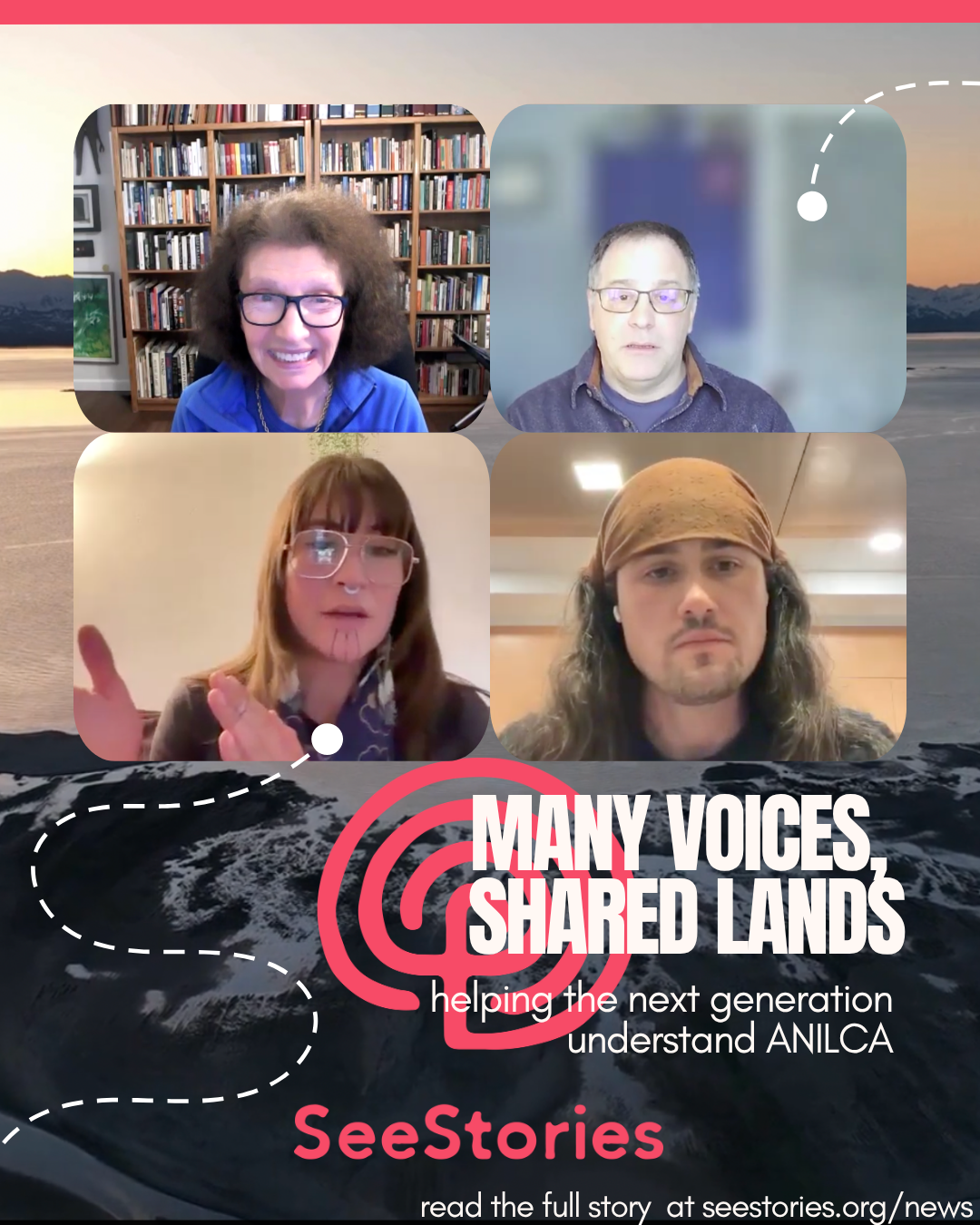
When Deborah Williams, former Special Assistant to the Secretary of the Interior focused on preserving President Jimmy Carter’s conservation legacy, approached See Stories about engaging the next generation of Alaskans in curriculum around ANILCA, we felt both honored and daunted.

ANILCA is a massive law that has shaped land management across Alaska in profound ways, yet it frequently finds itself in the courts. It is groundbreaking, but also contested and controversial. There are powerful stories within ANILCA. We have heroes like Katie John, who used ANILCA to fight for the right to subsist on her land, ultimately winning after three Supreme Court cases, and we have ongoing struggles around how ANILCA applies, or doesn’t, when it comes to the navigable waters in our state. ANILCA is not a simple thing to understand, and it is even harder to teach to the next generation.

National Park Service: Alaska Native Rights Champion Katie John Lived What She Believed: Honesty, Trust, Love, and Forgiveness
Through our one-credit course for educators, we set out to do just that.
The guest speakers in our 1 credit class for teachers have shared different perspectives and ideas about ANILCA, but the one clear and consistent message to Alaska’s youth, and in particular Alaska Native youth and any youth engaged in subsistence, is that knowledge is power. Understanding ANILCA equips young people with the tools to advocate for their lands, their rights, and their futures.
Educators are now bringing this learning into their classrooms using student-produced films on ANILCA, supported by Seth Bader, alongside lesson plans created by Megan McBride. Together, these resources are helping students engage with this complex topic in meaningful and accessible ways.


We are honored to have heard from Deborah Williams, a lifelong environmental activist and lawyer; X’adasteen Meyer, a Tlingit filmmaker and photographer with a passion for protecting lands and subsistence rights; Deenaalee Hodgdon, a Deg Xit’an Dene and Sugpiaq person who has used their voice as a fisherman and Alaska Native to advance sustainable management; and Steve Cohn, former Alaska State Director of the BLM and the Nature Conservancy, who has dedicated his career to understanding the relationship between people and place in Alaska, largely through the lens of ANILCA.
Each brought insight that helped shape a fuller, more nuanced understanding of this important law. As this work continues, we are developing an asynchronous version of the course to make these resources more accessible and sustainable for educators across Alaska. We are now cooking up an asynchronous class to make this work sustainable and accessible moving forward.
At its core, this effort is about empowering the next generation with knowledge, perspective, and the ability to engage with the systems that shape their lives. We are grateful to everyone who has contributed to this work and helped carry it forward! Stand by in the fall for an update, but read about the workshop here.